Inside HolaRide: Building a Ride-Hailing Platform's Driver App, Passenger App & Fleet Admin
A real project breakdown — the driver app, the passenger app, and the fleet telemetry system we built for HolaRide, including the specific technical problems that nearly broke each one.
HolaRide is a live ride-hailing platform we built end-to-end: a passenger app for booking rides, a dedicated driver app, and a fleet management/admin system for dispatch and telemetry. The passenger and driver apps are both live on the Google Play Store, and the fleet admin panel runs at fleet.holarides.net/admin. This isn't a hypothetical case study — it's a breakdown of three real, interconnected problems we had to solve, and what we actually did about each one.
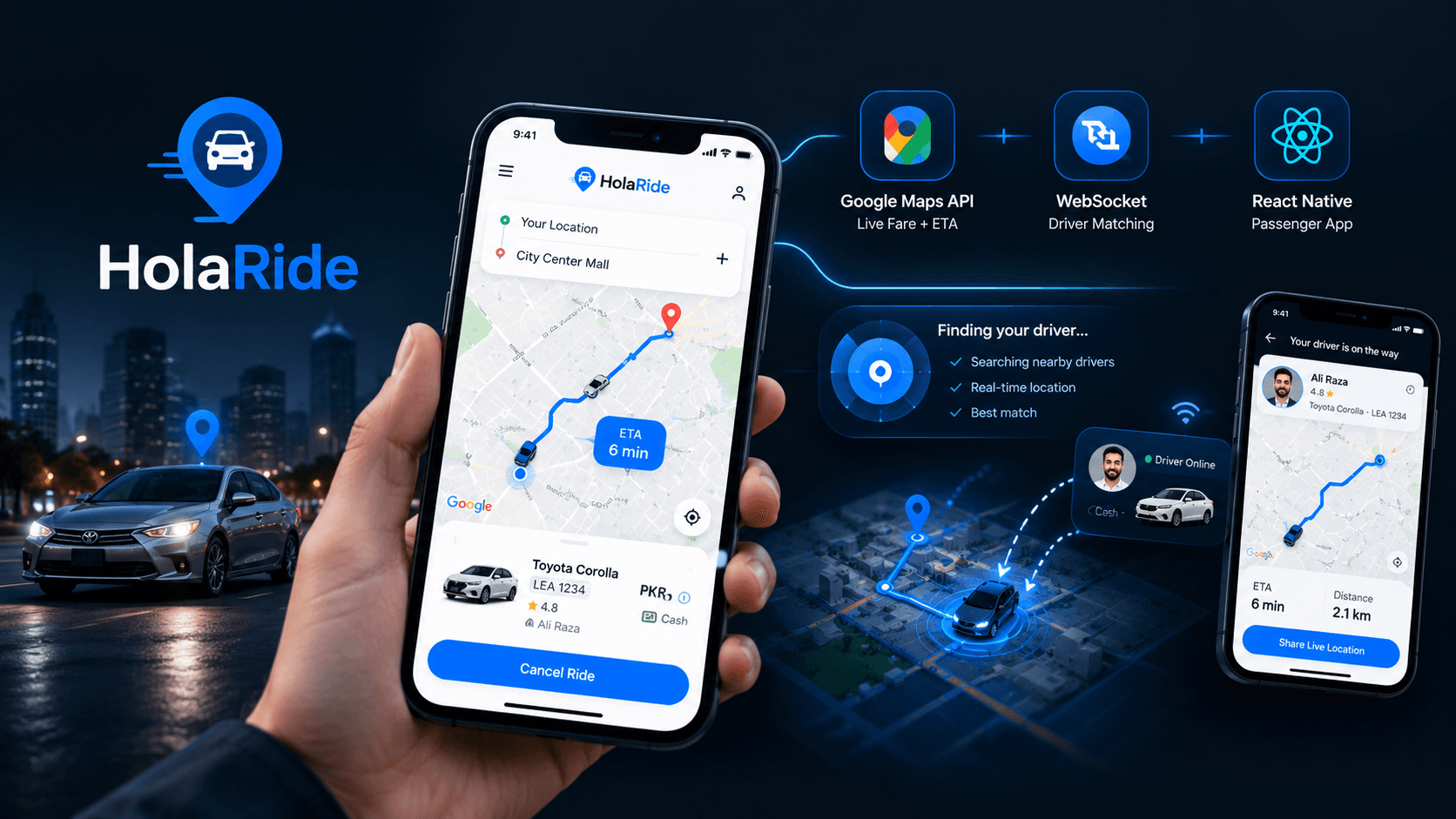
1. The passenger app: matching riders to drivers without losing requests
The core challenge on the passenger side was building a low-latency, resilient app for high-density urban mobility — a ride request has to reach an available nearby driver in under a couple of seconds, and it can't silently disappear if a network blip happens mid-request.
We built the passenger app in React Native, with Google Maps API and Matrix routing for live fare calculation and ETA, WebSockets for real-time driver matching, and Redux for predictable state management across a trip's lifecycle. The part that mattered most architecturally was fault-tolerant trip session management — every ride request is tracked through explicit state transitions server-side, so a dropped connection or a backgrounded app doesn't silently lose the request. The app is live on Google Play, currently powering thousands of real rides.
2. The driver app: keeping GPS accurate without killing the battery
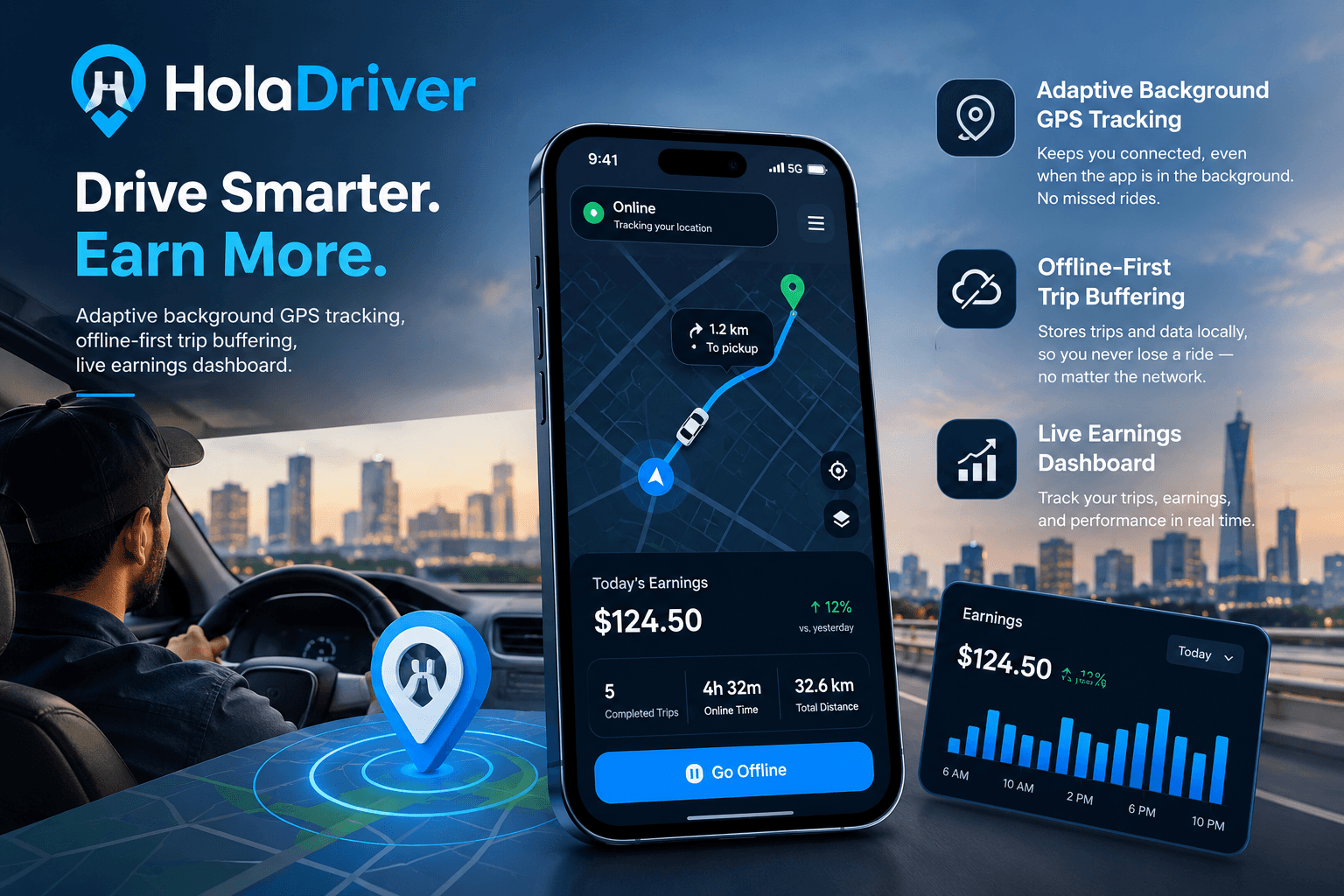
The driver-side app (HolaDriver) had a different core problem: ensuring consistent GPS tracking even when the app is running in the background — which is exactly when standard background location APIs tend to throttle or drop updates to save battery, and exactly when losing location data causes a driver to miss a nearby match.
We integrated native background location services with custom battery-saving heuristics — adjusting update frequency based on driver state (idle vs. en route vs. approaching a pickup) instead of polling GPS at a constant aggressive rate the whole shift. The driver app also includes real-time navigation, an earnings dashboard, and offline-first trip buffering, so a driver in a weak-signal area doesn't lose trip data. It's live on Google Play and rated well by active drivers, with meaningfully fewer dropped trips from location errors after this rework.
3. The fleet admin: fixing dispatch delays at peak hours
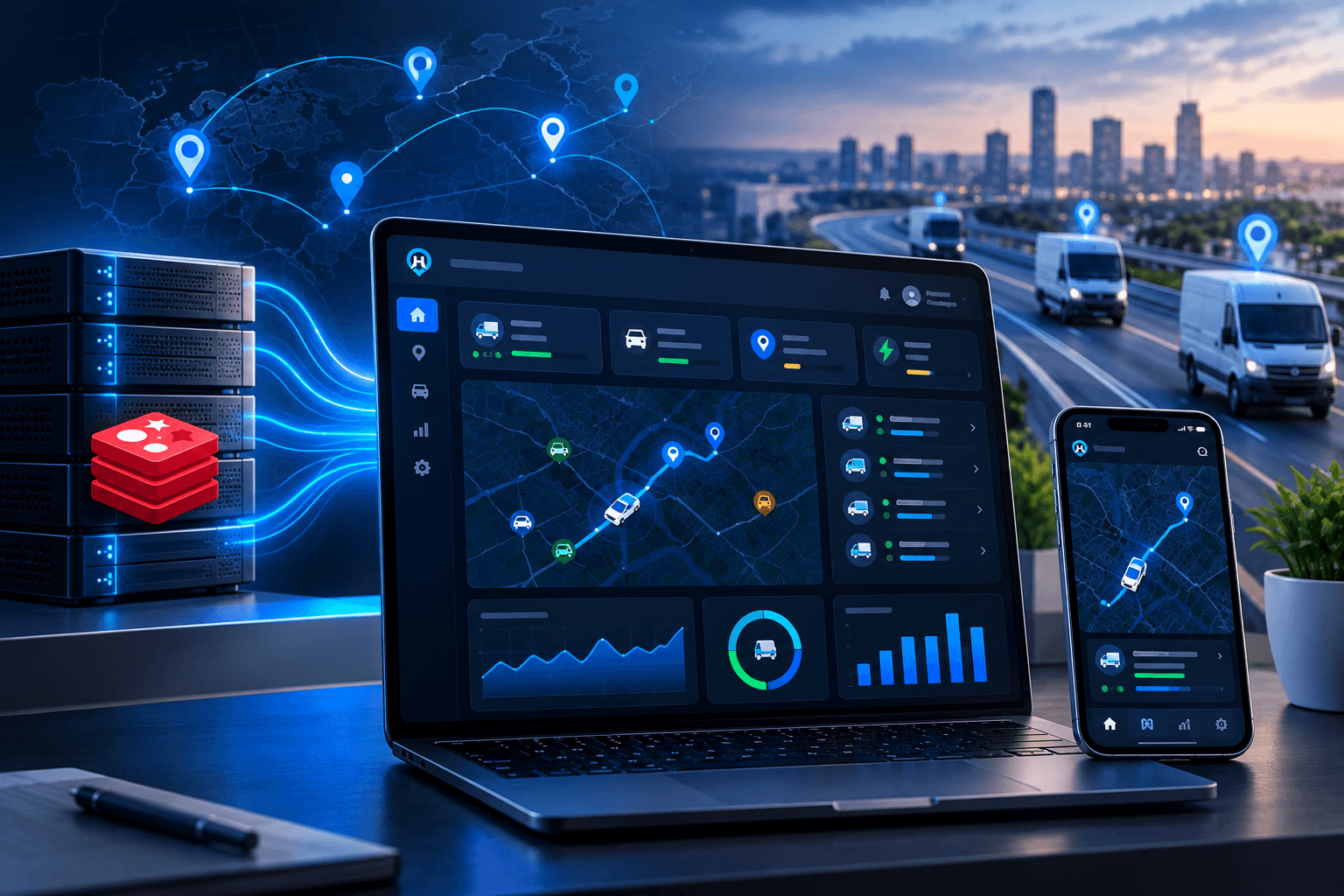
The hardest problem, and the one with the clearest before/after numbers, was on the backend fleet management side. The admin telemetry system tracks every active driver's live GPS position and handles automated dispatching — and under peak-hour load, telemetry latency was causing real dispatch delays: drivers and riders were being matched slower than the traffic could tolerate.
We diagnosed this as a caching and connection-handling problem, not a scaling-hardware problem. The fix was adding a Redis caching layer in front of the hot-path location lookups, combined with WebSocket connection optimizations for the live tracking feed, built on a React, Node.js/Express and MySQL stack with Socket.io handling the real-time layer. The result was measurable: API response times dropped by 54%, and the platform now handles 10,000+ daily rides dispatching smoothly through the same system that used to bottleneck under a fraction of that load.
What this project actually taught us
- ▸Real-time systems fail at the connection layer far more often than at the 'business logic' layer — the Redis + WebSocket fix mattered more than any application-level optimization would have.
- ▸Background mobile location tracking is a battery-vs-accuracy tradeoff you have to design for explicitly, not a default you can leave on "high accuracy" and hope for the best.
- ▸Fault-tolerant state management (never silently dropping a request) matters more for user trust in a ride-hailing context than almost any UI polish.
None of these numbers are hypothetical — they're the same facts published on our Case Studies page, describing a platform you can still visit today.
If you're building something with similar real-time or fleet-telemetry requirements — logistics, delivery, field service dispatch — this is the exact kind of problem our engineering team has already solved in production, not in a demo.